
Megan Chan*, Lindsay Larson*, Diego Gomez-Zara, Leslie DeChurch, and Noshir Contractor
*These authors contributed equally
Manuscript under review
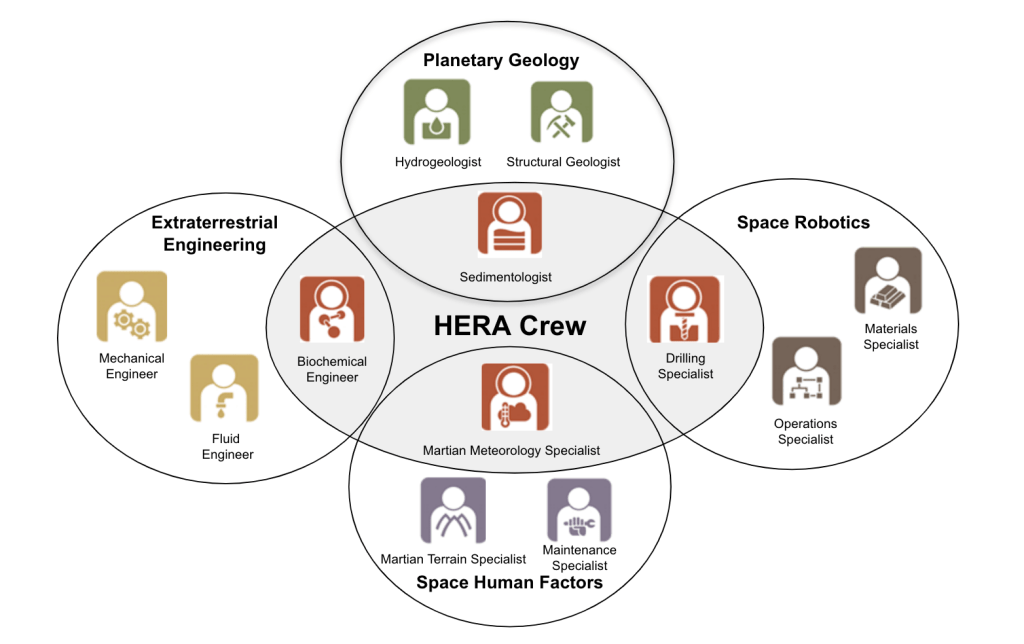
Abstract: Many modern organizations rely on overlapping, geographically dispersed team structures that blur group boundaries and challenge traditional role-based conceptions of leadership. In these multiteam membership (MTM) settings, individuals simultaneously belong to multiple, non-nested groups, creating parallel identities that complicate perceptual alignment about who should lead and who should follow. Integrating leader identity construction theory with network approaches, we develop and test a relational model of congruent leadership— leadership ties that are both claimed by leaders and granted by followers. This conceptualization treats leadership emergence as a jointly recognized social relationship rather than a unilateral attribution. We examine how congruent leadership emerges through the influence of endogenous network structure and identity-based cognitive frames in a high-fidelity NASA space-exploration simulation. Using exponential random graph models (ERGMs) across 26 multiteam sessions (N=243 participants), we show that congruent leadership is shaped by self-organizing network processes, including popularity and transitive closure, that reinforce leadership under conditions of interpretive ambiguity. Further, we demonstrate that parallel group identities play asymmetric roles in leadership emergence. In our context, we find that strong identification with divisional groups, based on colocation, predicted congruent leadership, whereas strong identification with functional groups, based on shared task knowledge and goals, predicted congruent followership. Together, these findings advance relational and networked theories of leadership by clarifying how leadership emergence depends on perceptual alignment in “blurry” MTM contexts.
Research supported by NASA awards NNX15AM32G, 80NSSC18K0221, and 80NSSC18K0276
 Megan Chan